
Africa
Stargazing in Namibia – Astrophotography at Wilderness Little Kulala
Your Guide to Africa
Merryn Haller
8/5/2026
A Stargazer's Paradise
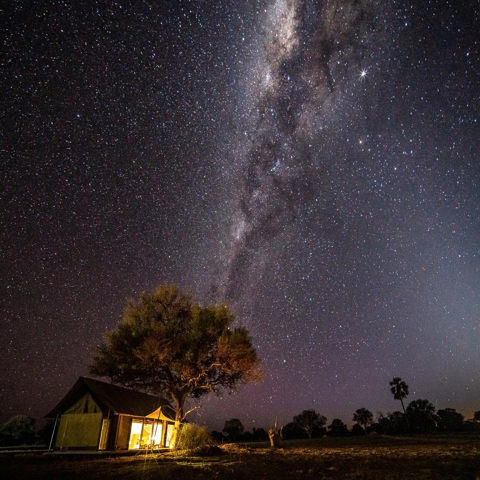
Ideal stargazing places
Kulala Wilderness Reserve & Wilderness Little Kulala
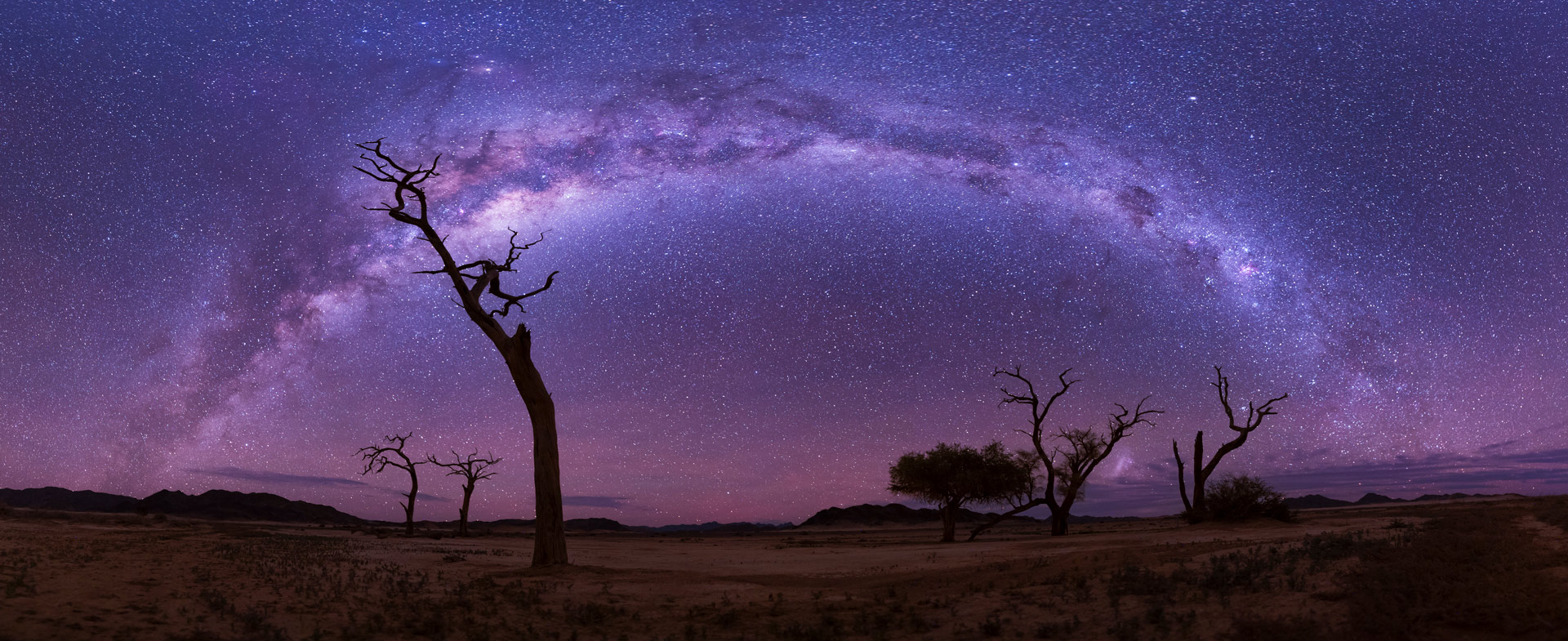
Kevin has photographed night skies in renowned stargazing locations like Bolivia, Chile, New Zealand, and his hometown of Sedona. Still, when asked about Kulala’s sky, he responds quickly: ‘One of the best I’ve ever seen.’
The skies themselves do most of the work, but Little Kulala’s position and surrounds certainly help.
‘What we're going for with night sky photography is that sense of awe, that sense of wonder… To have a clear night sky in a very dark place that also has something unique and interesting in the foreground. Something that makes you ask, “Wow, where is that place?” – Kulala was just perfect for that.’
Ancient limestone and sedimentary formations frame the Kulala Private Wilderness Reserve, while Little Kulala camp sits in front of the dry tree-lined Aub riverbed. ‘It’s just a short walk into the trees to find amazing foregrounds that were really fun to shoot, and very interesting,’ says Kevin.
The Kulala Wilderness Reserve shares a boundary with the NamibRand Nature Reserve, Namibia’s first certified International Dark Sky Reserve and the second in African with Gold Tier status. I asked Kevin if he could recognise a difference between Kulala’s skies and those in an official Dark Sky Reserve, but the answer wasn’t black or white.
‘It's hard to compare them because no two nights are the same. But I will say that there’s a combination of a lot of ideal conditions,’ he says.
‘The night skies were maybe comparable to the Atacama Desert, for example, but that’s nowhere near as convenient a place, especially if you want interesting foregrounds.’
Kulala is a popular self-drive destination. The trip to Sossusvlei takes roughly five hours from the town of Windhoek, but once you’re there, there’s no further to go to see dark skies.
‘I just took a group of people out recently [in Arizona], and we had to go so deep into the desert to an extremely inaccessible location. We got a trailer stuck on the way out there. I was worried about people getting heat exhaustion. It was an adventure, but it was difficult, because there wasn't much time of the night to sleep.
‘To compare that to Little Kulala, where I was literally sleeping in this amazing, comfortable bed, and I could wake up at any moment and look up and see this incredible night sky… How unique of an opportunity is that? And how much easier and more accessible.’
Sleeping under the stars at Little Kulala
Stars, galaxies & constellations over the Namib
Dark sky perspectives
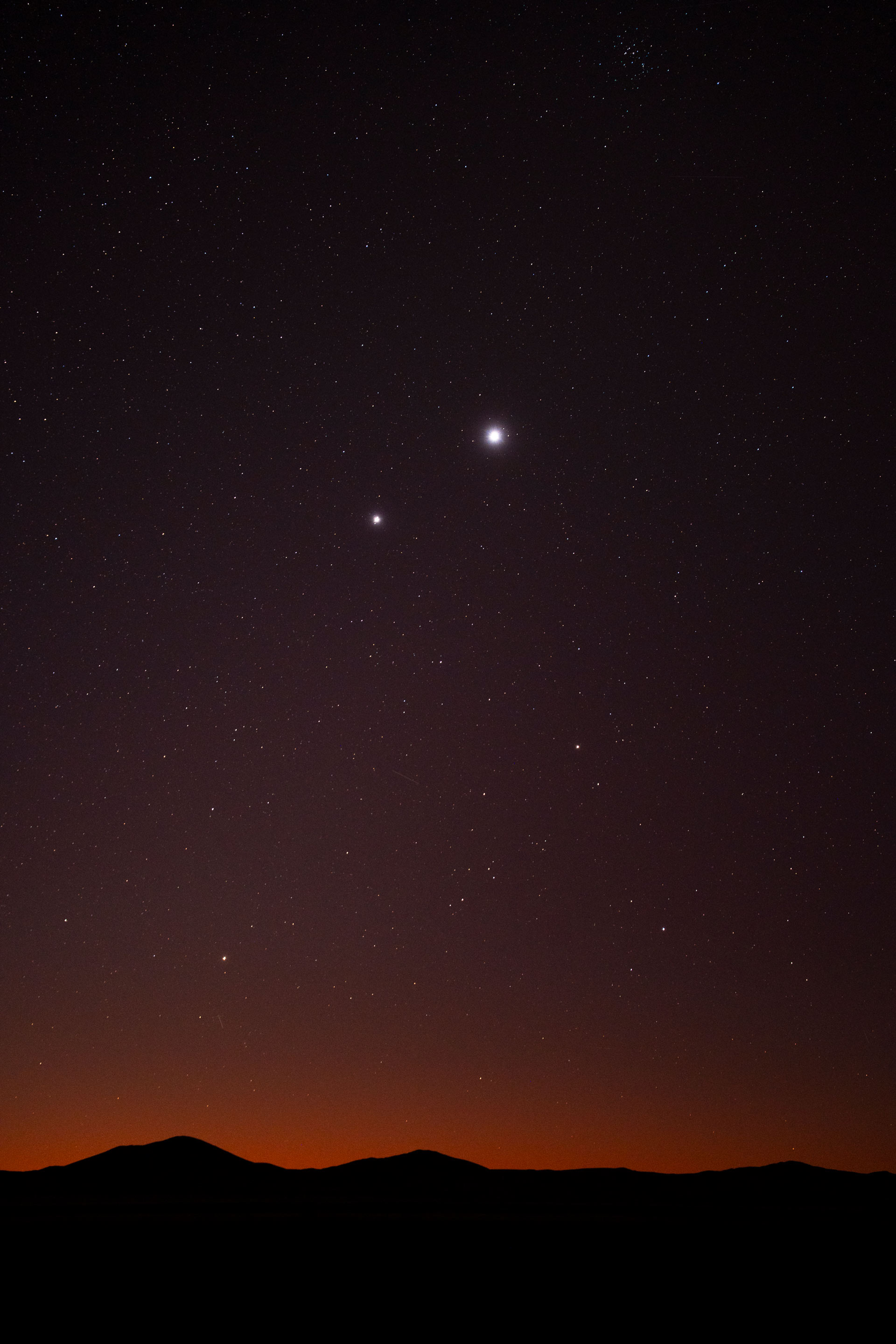
Kevin delivers one fascinating fact after another as our conversation progresses, but in between all that, he ponders the metaphysical aspects of stargazing. He describes the Milky Way as both ‘a timepiece and a calendar if you know how to read it’.
It’s a portal, too, in many ways: ‘You’re looking out across space and time; experiencing it in scales that are hard to imagine. The core of the galaxy is give or take 30,000 light years away, which means that the light in our photographs is 30,000 years old. On the night that I captured it, it had been travelling across space for 30,000 years at the speed of light in order to reach us. So, that light you're capturing, it's older than human civilisation.
‘It's much like any other kind of transcendent moment in nature. If you give yourself that opportunity to slow down, observe and experience it, to feel what it is to be a very, very, very small creature on this little planet, in this little corner of the universe, and to look out and realise how much more there is out there, how much universe goes on beyond your own ability to perceive it… It changes people. It really does.’
Finally, I ask Kevin about a French expression he introduced me to back in Namibia. L'appel du vide meaning ‘the call of the void’. ‘It's meant to reference when people see a big drop off,’ he says; that strange and inexplicable impulse to jump when you’re standing at the edge of a cliff.
I ask him if the call comes exclusively over canyons, or if it’s something he might have felt stargazing in Namibia. ‘It’s definitely the same feeling,’ Kevin remarks. ‘Like, “Oh my god, what if I could fall into this infinite expanse?” You gain this appreciation that the Earth is holding onto you.’

More to discover
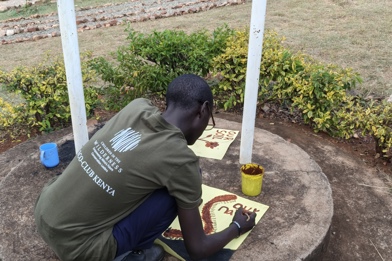
Children in the Wilderness celebrates World Conservation Day
Explore how Children in the Wilderness celebrated World Conservation Day 2026, inspiring young peopl...
Read moreJosephine Bestic
29.07.2026
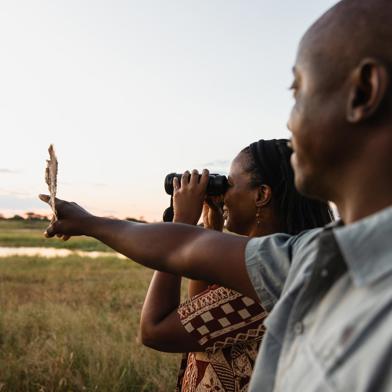
Wilderness invests in the guides who protect people, wildlife and wild places
Discover how Wilderness develops world-class safari tour guides through immersive training, strength...
Read moreLeigh Newlands-Jack
28.07.2026
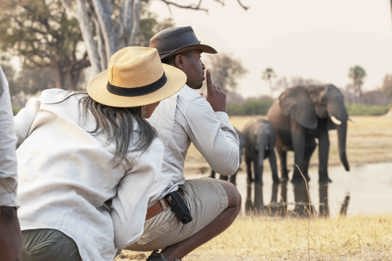
Walking in the wild: Wilderness guides explore an immersive safari experience
From tracking elephants to reading spoor, discover how expert Wilderness guides reveal Africa's wild...
Read moreIngrid Wood
17.07.2026
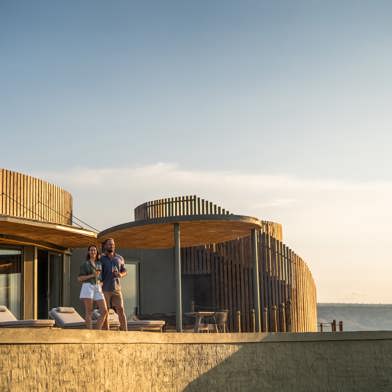
Magashi Peninsula: where design is rooted in place
Discover how Rwandan artisans, designers and traditional crafts shaped Wilderness Magashi Peninsula,...
Read moreMelissa Siebert
15.07.2026

How Wilderness is shaping Tanzania's next generation of exceptional guides
Go behind the scenes of a month-long Wilderness guide training expedition across Tanzania and discov...
Read moreLauren Dold
14.07.2026
Let’s plan your next journey
Ready?
When we say we’re there every step of the way, we mean it, literally. From planning the perfect circuit, to private inter-camp transfers on Wilderness Air, and easing you through Customs. We’re with you on the ground, at your side, 24-7, from start to finish. Ready to take the road less travelled? Contact our Travel Designers to plan an unforgettable journey.