Rwanda

Magashi Peninsula: where design is rooted in place

Your Guide to Africa

Melissa Siebert

7/15/2026

Discover the makers behind our Rwanda safari story

An aerial view of Wilderness Magashi Peninsula on the banks of the lake in Akagera Rwanda

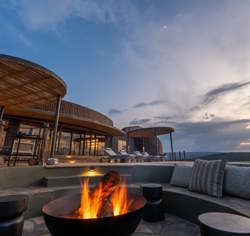
Deep within Akagera National Park – Rwanda’s only sanctuary for savannah wildlife – amidst 10,000 acres of rolling green hills and golden grasslands, you’ll find Wilderness Magashi Peninsula. Poised on the edge of Lake Rwanyakazinga, with the Mutumba Mountains rising to the west, it’s a striking sculpture of wood, canvas and glass. Inside, Rwanda’s landscapes and living traditions are reflected in the detail, with locally made furnishings and handcrafted décor showcasing the skills of the country’s artisans.

‘Magashi Peninsula embodies an intimate, seamless connection to the land,’ says Artichoke Interior Design’s Câline Williams-Wynn, lead designer on the project along with Luxury Frontiers. ‘Its uniqueness lies in its organic curves, natural wood elements, and a beautifully open layout that effortlessly blends indoor luxury with the expansive outdoors. The true essence of the design is to offer a luxurious yet thoughtfully understated safari experience. Ultimately, Magashi Peninsula feels like a natural extension of the wild itself.’


Safari hues dominate: olive greens and shades of gold, and khaki. As do locally sourced textures: linen, leather, and natural cowhide. Layered upon and around them are striking décor features that testify to the richness of Rwandan culture going back centuries, which many local artisans continue to proudly produce today. 


‘At Artichoke, our starting point for every new project is to discover the unique elements of a country or region that can be woven into the design and furnishings,’ Câline says. ‘This approach ties the property directly to the local people and location. Because we have done a lot of work in Rwanda over the past couple of years, we’ve been fortunate to foster wonderful relationships with a range of local craftspeople.


At Magashi Peninsula, those collaborations have shaped many of the property’s distinctive details. From locally made furnishings to subtle design references that celebrate Rwandan traditions, guests will discover thoughtful touches throughout that reflect the character and heritage of the country.


These ‘details’ are on dramatic display in the camp’s common areas, as well as carried to some degree into the two-bedroom villa (where the design ‘explodes,’ Câline says) and the two one-bedroom suites. 

01 / 08

Woven wall and ceiling treatments 

Basketry has a long history in Rwanda, and preserving that history is Irebe, a women’s weaving collective established by Fraterne Ngiruwonsanga in 2016. Founded to promote women’s empowerment, fair trade, and rural development – as well as to preserve generations-old weaving traditions within responsible practices – Irebe now employs nearly 1,500 women in 22 co-operatives across the country. Magashi Peninsula features some of their work: intricately patterned ceilings woven from palm leaves, bamboo, and urufunzo (papyrus) and wall panelling made from handwoven baskets. 


‘It is our tradition that all women know how to weave baskets,’ Fraterne says. ‘I got inspired seeing my grandmother do it, and my mom also. One of the things that has never changed is our basket weaving. Some of our patterns have been preserved for more than 1,000 years. I really wanted to go deep and understand all the patterns.’


Rwandan basketry patterns are stylised geometry with cultural significance. The ibaba pattern features triangular shapes similar to birds’ wings; itangaza represents morning light; abashi uses rhombus patterns to suggest traditional wooden tools; umuraza is a zigzag design representing a winding river; ikibero uses symmetrical, vertically aligned triangles to create a rhythmic design meaning the human thigh. There are dozens more. Perhaps the most famous Rwandan basket is the lidded agaseke or ‘peace basket’, traditionally used to hold valuables and given as gifts, and today a symbol of hope and reconciliation. 


‘It’s hard because we haven't documented our culture,’ Fraterne reflects. ‘Working with Magashi Peninsula was an opportunity for us to bring our cultural techniques into luxurious architecture and design. But we still have more to discover, and more to do to help people understand what our ancestors have done.' 

01 / 04
Cultural experience in Rwanda with local community interaction

Pendant lights

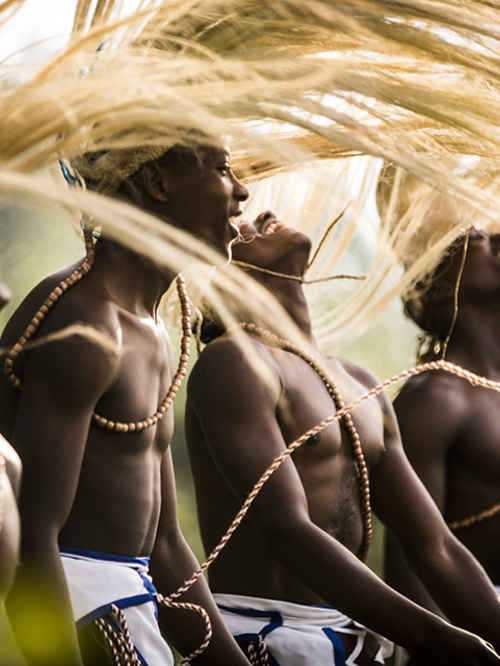
Suspended from the ceiling in the camp’s main area, these gorgeous lights created from beads and sisal honour royal tradition. ‘The design and details come from the traditional Intore dances and the king’s royal headpiece,’ explains the lights’ creator, Kigali-based fashion designer Joselyne Umutoniwase. ‘The headpiece signifies the traditional crown of the king, in black-and-white beads, and the sisal references Intore dancers’ headdresses, which symbolise strength. Both symbolise Rwandan culture and beauty.’ The Intore – the King’s elite warriors – danced choreographed battles, shaking their sisal headdresses like lions’ manes, a gesture of ferocious protection. Re-enactments can be seen across Rwanda today. 

Hand-painted imigongo tiles 

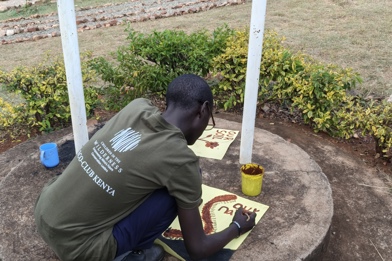
Imigongo is an indigenous art form in Rwanda, dating from the 18th century and still widely used across the country in interior design, architecture, fashion, basketry, and art. Magashi Peninsula boasts handsome imigongo tiles around the bar in the main area. Traditionally made from dried cow dung mixed with ash and painted with natural pigments, imigongo features a variety of bold geometric patterns symbolising prosperity, harmony, and resilience.  


Macramé screens, and basket wall features
Gina Waldman of Cape Town-based Waldman Studios is a designer who integrates narrative through design details. Inspired by imigongo’s geometry, the basketry, and other traditional crafts, Gina and team helped sensorily tell Magashi Peninsula’s story. 


‘We created the large woven macramé screens featured in the lodge,’ Gina explains, ‘including the richly textured green knitted screens in the main area lounge and the white geometric rope installations in the villa’s main area. We also worked with the beautiful scalloped baskets made by Fraterne for the villa, designing the layouts and installing them as large-scale, sculptural wall features with a strong architectural rhythm.


‘The work was inspired by Rwanda’s age-old basket-weaving tradition and the remarkable craftsmanship found throughout the country. We were particularly drawn to the warmth, texture and humanity that woven materials bring to a space. We love that handmade pieces carry subtle irregularities and imperfections that tell the story of the maker – qualities that simply can’t be replicated by machine. The intention was to celebrate those traditional techniques in a contemporary way.’


Collaborating with Câline, Fraterne, and others on creating Magashi Peninsula’s interiors was both ‘inspiring and rewarding’. 


‘For us, hospitality design is at its most meaningful when it creates a genuine sense of place,’ Gina says. ‘We wanted guests to experience not only the beauty of Rwanda’s landscapes but also the richness of its craft traditions through materials, texture, and artistry that felt deeply connected to the region.’

01 / 04
Wilderness Camp

Explore Wilderness Magashi Peninsula

Discover more

More to discover

Embark on another journey through Earth's ultimate, untamed places. These stories capture the raw beauty, passionate conservation efforts, and unique experiences that define Wilderness. We've handpicked these articles to deepen your connection with the wild and inspire your next adventure.
Read them here
The male lion is the king of the Wilderness

Let’s plan your next journey

Ready?

When we say we’re there every step of the way, we mean it, literally. From planning the perfect circuit, to private inter-camp transfers on Wilderness Air, and easing you through Customs. We’re with you on the ground, at your side, 24-7, from start to finish. Ready to take the road less travelled? Contact our Travel Designers to plan an unforgettable journey.