Africa

How Wilderness is shaping Tanzania's next generation of exceptional guides

Your Guide to Africa

Lauren Dold

7/14/2026

What does it take to become an excellent guide?

Group of safari guides departing on a training expedition in Tanzania

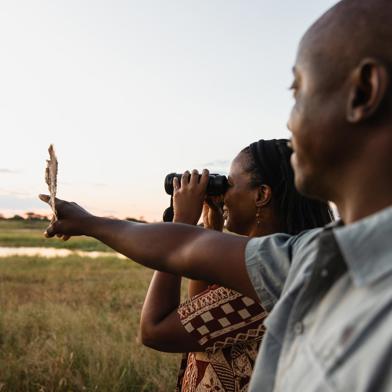
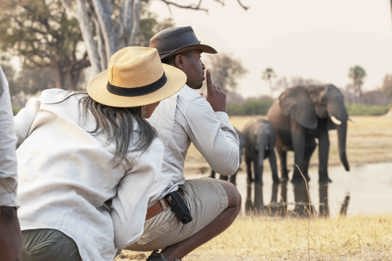
Ask what makes an exceptional safari guide and most people will point to knowledge – identifying birds, reading animal behaviour or track and sign skills. Those are fundamental, but they are only the beginning. The very best guides are lifelong students: endlessly curious, adaptable, and always looking for new ways to understand the landscapes, wildlife and people that shape every safari.


It's a philosophy that underpins guide training across Wilderness, and earlier this year, it took shape in an ambitious month-long expedition across western and southern Tanzania.

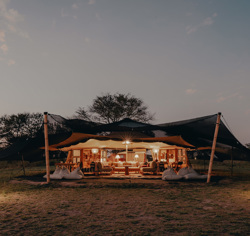
Led by Wilderness Tanzania guide trainer Frederic Ueberschaer, 15 guides and four support crew set off in three vehicles to explore parts of Tanzania far beyond the northern safari circuit where they usually work. Over 24 days, they travelled through forests, mountains, lakes, grasslands and remote national parks, camping almost every night and embracing the challenges brought on by the rainy season.


The objective wasn't simply to see new places but to broaden perspectives, experience unfamiliar habitats, wildlife, cultures and ways of guiding. And ultimately, to return to the Serengeti as even better guides. 

Leaving the comfort zone

Every one of the guides on the expedition already leads safaris professionally. They know the Serengeti and Lake Manyara National Park intimately. They spend their days introducing guests to Africa's iconic wildlife and sharing the stories of some of East Africa’s greatest ecosystems.


So why send experienced guides somewhere completely different?


Because the best guides never stop learning. Instead of reinforcing what they already knew, the expedition deliberately placed them in unfamiliar environments where they had to become students again.


For many, it was their first visit to western and southern Tanzania.


‘It has been really amazing,’ says guide Haji Suleiman. ‘I'm visiting some other parts of Tanzania that I've never been before. It's actually just like a dream come true because I've been thinking of visiting these areas for a long time.’


Guide Salmin Nduguta describes the experience in equally personal terms.


‘This trip showed me places that I had never even wished to see, but Wilderness took me there.’


As the team travelled from Lake Victoria to Mahale National Park, Katavi, Kitulo and Ruaha, they discovered a side of Tanzania that many had only heard about. The diversity of landscapes was intentional: every destination challenged the guides to think differently about wildlife, conservation and interpretation.

01 / 05

Becoming beginners again

For almost a month, the team spent every minute together. Long days on the road were followed by evenings setting up camp before doing it all again the next morning.


Many had never done some of these tasks before.


Haji admits that camp life pushed him outside his comfort zone.


‘Camping is something that I was not that good at before,’ he says. ‘But now I find myself better at setting up a tent, unpacking it and packing it again. I was not that used to kitchen issues, but I found myself progressing... cleaning the utensils, cooking and helping each other.’


Frederic intentionally designed it this way; guides, the chef and the camp manager packed tents, prepared meals, bought supplies, washed dishes, repaired vehicles, communicated with park rangers and tackled whatever the day demanded. 'The trip was very helpful in melding the guides, the chef and the camp manager into one team,’ he says. 'We learned that we are not different people, but just have different roles at different times.’


That lesson extended far beyond the kitchen. Guide Ramadhan Roshan reflects on arriving in camp after a full day on the road.


‘You're arriving at the place at the same time, and maybe you're planning on building your tent and going to sleep, but they are thinking about going to the kitchen to cook for you. It's something that we have learned – what they are feeling.’


Experiencing those responsibilities first-hand gave the guides a deeper appreciation for the people working behind the scenes to create every Wilderness safari.

01 / 04

A different way of seeing Tanzania

The itinerary itself became the classroom. Rubondo National Park introduced boat safaris and island ecosystems on Lake Victoria. Mahale National Park replaced open plains with dense forests, where the team tracked through the mountains overlooking Lake Tanganyika. Katavi offered vast floodplains and walking safaris, and Kitulo National Park challenged assumptions about what a national park should look like.


‘When you hear a national park, you think animals’, says Ramadhan. ‘But over there it is more about flowers and connecting with nature. You are dealing with different kinds of flowers, landscapes and insects.’
For Swaum Said, Wilderness Tanzania's only female Game Package Guide, the contrast between northern Tanzania and these new environments was striking.


‘In the Serengeti, it’s so open,’ she says. ‘In Mahale it was just forest.’ She found herself looking more closely at the finer details of the bush: ‘Walking safaris are different,’ she explains. ‘You encounter different details like flowers and animal tracks and signs.’


These destinations broadened the way the guides observe, interpret and tell stories about nature.

01 / 03

Learning from the unfamiliar

Some of the expedition's most memorable moments came from experiences the guides had never had before.


For Haji, finally seeing chimpanzees was the fulfilment of a long-held dream


‘Chimpanzees were one of the main things that I've been wishing to see for a long time.’


Salmin agreed. ‘Tracking the chimpanzees was one of the best moments to me,’ he says. ‘Encountering a mother with a baby was just amazing.’


The expedition also introduced many of the guides to water-based experiences that were entirely new: Fishing on Lake Tanganyika, travelling by boat and spending time on two of Africa's great lakes expanded their understanding of Tanzania’s extraordinary diversity.


Rather than relying on the abundance of iconic wildlife, these parks demanded different interpretation skills and encouraged the guides to keep expanding their knowledge.


Haji says visiting these different ecosystems has already influenced the way he thinks about guiding.


‘You don't come across animals as much as you do in Serengeti, so it has inspired me to learn more about birds and botany,’ he says.

Seeing a safari from the guest's perspective

Those long days together created another kind of classroom. 'There was a lot of chat and discussions about life, nature, guiding, families, and so many stories from the bush,’ Frederic recalls. Sharing ideas and experiences around the campfire became just as valuable as the lessons learned in the field.


Perhaps the most unexpected lesson came from changing seats. Instead of spending every day driving, many of the guides spent long hours sitting in the back of the vehicle as passengers.


For Ramadhan, it completely changed his perspective.


‘I think you get the feeling of how the guests would normally feel when they are sitting at the back’, he says. ‘At least you know what you're supposed to do after a few hours: stop, stretch a little bit and have some coffee. We always do it, but we never felt what they were feeling.’


It is a simple observation, but one with a direct impact on the guest experience. Understanding the pace, comfort and rhythm of a safari from the passenger seat helps guides anticipate guests' needs in ways that are difficult to teach in a classroom.


Lighting a spark

When asked what they would do after the expedition, many of the guides had similar answers: They wanted to keep exploring.


'Many of the guides felt inspired to travel more, says Frederic. ‘Yes, their job is to drive the national parks and take out our guests, but few had realised how amazing it is to travel and explore new places for yourself. It was like lighting a match.’


‘Tanzania itself is enough for me to travel across,’ says Salmin. ‘There is still so much to see’.


Hassan hopes future training might one day take him beyond Tanzania to experience other Wilderness destinations.


Haji already has a growing list of places he wants to return to.


That curiosity is exactly what Wilderness set out to inspire: to cultivate guides who remain students of nature throughout their careers.


Because wildlife patterns and behaviour changes, landscapes and conditions change, guest expectations evolve, and the best guides evolve with them.


By investing in experiences like this, Wilderness continues to develop guides whose knowledge extends beyond a single destination, whose understanding reaches beyond wildlife alone, and whose curiosity inspires them to keep exploring, questioning and learning.


For every guest who travels with Wilderness, that commitment to continual learning translates into richer stories, deeper understanding and more meaningful connections with the places they explore.


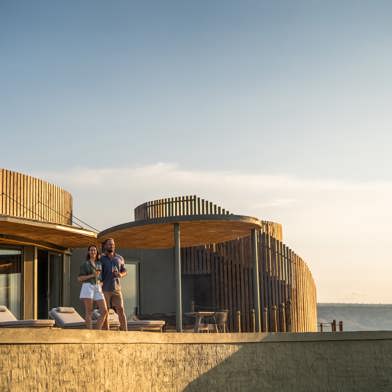
Wilderness Camp

Explore Wilderness Usawa Camp

Discover more

More to discover

Embark on another journey through Earth's ultimate, untamed places. These stories capture the raw beauty, passionate conservation efforts, and unique experiences that define Wilderness. We've handpicked these articles to deepen your connection with the wild and inspire your next adventure.
Read them here
The male lion is the king of the Wilderness

Let’s plan your next journey

Ready?

When we say we’re there every step of the way, we mean it, literally. From planning the perfect circuit, to private inter-camp transfers on Wilderness Air, and easing you through Customs. We’re with you on the ground, at your side, 24-7, from start to finish. Ready to take the road less travelled? Contact our Travel Designers to plan an unforgettable journey.