Zimbabwe

Walking in the wild: Wilderness guides explore an immersive safari experience

Your Guide to Africa

Ingrid Wood

7/17/2026

Walking safaris are an intimate way to see Africa
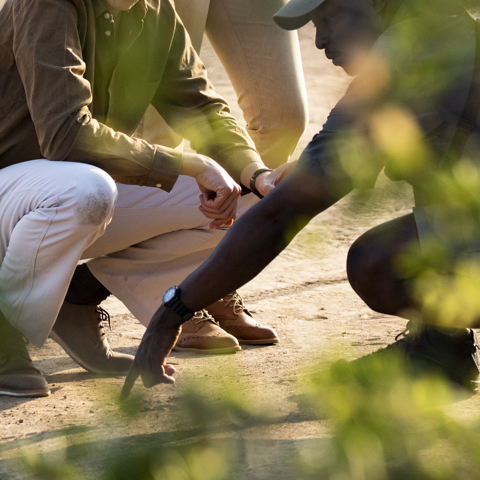
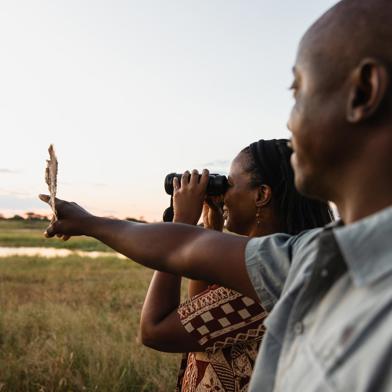
While game drives offer an exceptional overview of the wilderness, covering vast areas and revealing an abundance of wildlife, walking safaris offer a different perspective on the African bush. Slower, quieter, they bring guests closer to the details that are often missed from a vehicle. 


On foot, there is time to inhale the scent of wild sage, compare the size of your hand to a track in the sand, or watch a dung beetle going about its day oblivious to your presence. There is an intimacy that is difficult to experience from a vehicle, and a sense of becoming part of the landscape rather than simply passing through it.

Walking safaris have deep roots in Southern Africa and are widely regarded as one of the most immersive ways to experience the wilderness. By slowing down, guests engage not only with wildlife, but also with tracks, plants, insects and the countless interactions that make up a functioning ecosystem.


It’s not just guests who enjoy the thrill and intimacy of a walking safari. Despite their deep familiarity with the wilderness, our guides remain captivated by the experience. 

Safe encounters

Our walking safaris in Zimbabwe are led by highly trained professional guides, with years of field experience and a deep understanding of animal behaviour. Their expertise allows them to safely interpret the wild while giving guests a closer connection to it.


Few guides embody the spirit of walking safaris quite like Peter Gava, Linkwasha Concession Head Guide for Wilderness Zambezi in Hwange National Park. Peter has devoted more than four decades to understanding the wild, with experience spanning wildlife research, conservation, tourism and guiding across Southern Africa. 


‘An African safari without a bush walk is phenomenal but incomplete,’ says Peter. ‘The overlooked moments that we miss while game driving matter, because they play a role in telling the full African story, and a walking safari achieves just that.’


Peter received his Professional Guides Proficiency Certification for Walking Safaris in 1998, although his experience on foot stretches back much further through research projects and field patrols during his National Parks career. For him, walking safaris create a deeper relationship with nature while serving as a humbling reminder of our place within the natural world. ‘Being on the ground shows us how small we are.’


‘Nothing beats approaching big game on foot,’ says Eustace Matavire, a Professional Guide who has been with Wilderness for 15 years and earned his Professional Guide certification in 2020.  ‘Walking safaris ground me. I'm more aware of my environment, all my senses are at work.’ 


His passion for walking stems from the way it reconnects him to both nature and human history. He often finds himself reaching back in time, imagining what his ancestors once saw, heard and smelled in the same wilderness. 


For Senior Professional Guide Tendai Ketai, who has been leading walks since obtaining his licence in 2014, the experience is transformative. It is, after all, the oldest way of reading a landscape. 


‘It’s the traditional way of interpreting nature. You become part of nature and you get to use all your senses when you are on the ground, noticing the small things that you miss when driving.’


Professional Guide Joshua Magaya, who is based at Wilderness Little Makalolo, has been with the company for 10 years, and also received his walking licence in 2014. ‘⁠l love paying attention to subtle signs on walks. It’s a way to feel connected with nature – all senses are activated as soon as you start walking. You also have a chance of getting close to big game, and gaining a better understanding of the full circle.’


Beyond the thrill of encountering wildlife on foot, walking safaris reveal a side of the bush that few guests experience from a vehicle. Success depends on patience, observation and a guide's ability to interpret the countless signs scattered across the landscape.

Reading the signs 

The guides rely on finely tuned observational skills to read the bush before the wildlife reveals itself. Tracks, alarm calls from birds, shifting winds and subtle signs of movement all help them build a picture of what lies ahead before they see it. Tendai describes it as having ‘a third eye’ attuned to spoor, animal behaviour and the rhythms of the bush. 


Safety and preparation are central to every walk. 


‘A Walking Guide prepares themselves and the guests before going on the activity. Both instinctual and natural senses of the wild and practical knowledge are automatically switched on and activated to the highest level,’ says Peter. ‘Guides are trained to gauge their guests’ comfort levels and determine appropriate viewing distances when approaching big game.


‘The success of a walk lies in safety for both the walking party and the animals,’ he adds. ‘Spotting wildlife before they are aware of human presence creates safe viewing opportunities, allowing us to spend time with them while leaving them undisturbed.’ 


‘Respect for animals means approaching at a safe distance and leaving them exactly as they were found,’ adds Eustace who also highlights the importance of quiet movement. ‘Animals inhabit a world of subtle sounds which is why we move quietly and respectfully through their environment.’


Some guests arrive nervous about being on foot, but by keeping them engaged they often relax quickly. ‘They are often surprised to see how wildlife avoids confrontation with us,’ says Eustace. ‘But they also see how some animals allow us to get close and show no aggression. Walking safaris teach guests how humans once coexisted with animals, while also showing how animals are adapted to survive in the wilderness.’

01 / 07

The appeal of walking safaris in Zimbabwe

All four of the guides count Hwange and Mana Pools National Parks among Africa’s finest walking destinations. Home to more than 100 mammal species and hundreds of bird species, these areas offer endless opportunities for discovery, from encounters with elephants and buffaloes to fascinating observations of ecological relationships. 


‘Most importantly, it provides answers to one of the safari's most compelling questions: how things work,’ says Peter.


‘Both areas’ experiences are amazing,’ says Joshua. ‘Mana Pools offers an open terrain experience, river access, and safe encounters. Hwange National Park is famous for its herds of elephants so walking here is like following ancient well-worn elephants paths. It’s wonderful to explore Hwange’s diverse habitats – golden savannah, mopane and teak forests.’


The terrain is accessible for many guests, adding to the appeal, says Tendai. ‘The experience changes with the seasons too. The dry months bring dramatic big-game sightings, while the green (summer rainy) season offers colour, insects and an entirely different view of the ecosystem.


Ultimately, walking offers something that no vehicle can replicate: perspective.


For Eustace, the greatest reward is seeing guests develop a deeper insight into details that might otherwise go unnoticed. ‘It’s the appreciation of little things that we often overlook during game drives.’


Walking is often the experience that completes the safari story, says Peter, and the memories created on foot are often the ones guests carry home most vividly. 


‘When a guest says thank you for a fantastic walking experience it does not explain their gratitude as much as their eyes and the atmosphere – that shows the appreciation of an unforgettable experience.


‘An elephant picking up camelthorn pods, sniffing at your walking party in the distance, a towering giraffe slowly moving past, and impalas milling nearby all sum up a journey that truly changes lives.’


Ready to walk wild?

Ready to walk wild? Explore our Zimbabwe journeys and begin your adventure: 

Zimbabwe journeys

More to discover

Embark on another journey through Earth's ultimate, untamed places. These stories capture the raw beauty, passionate conservation efforts, and unique experiences that define Wilderness. We've handpicked these articles to deepen your connection with the wild and inspire your next adventure.
Read them here
The male lion is the king of the Wilderness

Let’s plan your next journey

Ready?

When we say we’re there every step of the way, we mean it, literally. From planning the perfect circuit, to private inter-camp transfers on Wilderness Air, and easing you through Customs. We’re with you on the ground, at your side, 24-7, from start to finish. Ready to take the road less travelled? Contact our Travel Designers to plan an unforgettable journey.